
Capture Life's Moments in Perfect Detail: A Comprehensive Review of the Vivo X90 Pro Camera-Centric Smartphone in India
 |
| https://rukminim1.flixcart.com/image/832/832/xif0q/mobile/1/m/r/x90-pro-v2219-vivo-original-imagzzrqg2zbjfas.jpeg?q=70 |
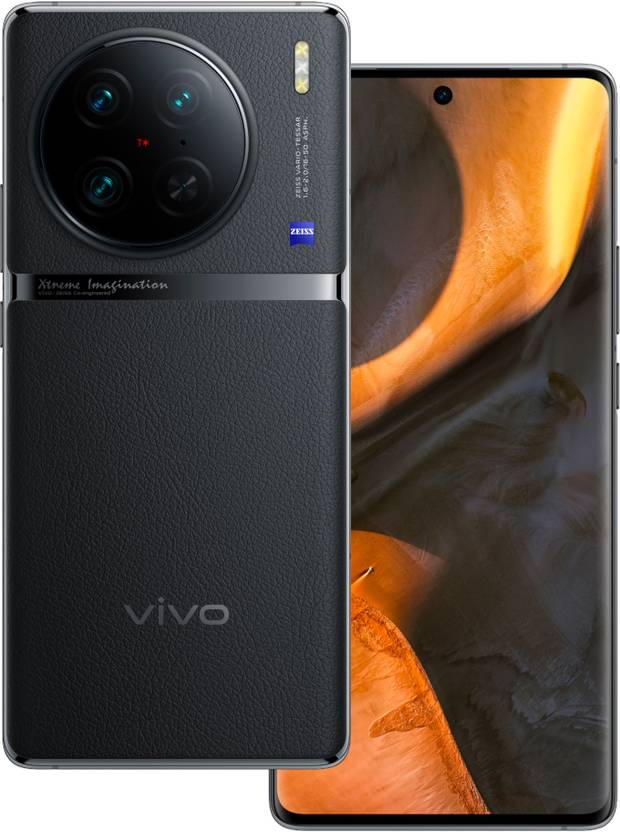
The most recent Android flagship device to be released in India is the Vivo X90 Pro. Along with it, the company also unveiled the Vivo X90. Given that it costs more than Rs. 80,000 in India, the Vivo X90 Pro is seen as the X80 Pro's replacement. With the release of the X90 Pro, Vivo has become the second Indian smartphone manufacturer to introduce a device with a 1-inch camera sensor. Currently, only the Vivo X90 Pro and the X90 are available in India with the flagship MediaTek Dimensity 9200 SoC.
Vivo X90 Price in India
The Vivo X90Pro is available in India with a single storage option. The phone costs Rs. 84,999 and has 256GB UFS 4.0 storage in addition to 12GB of LPDDR5X RAM. It competes with devices such as the Xiaomi 13 Pro, iPhone 14, and Samsung Galaxy S23. The X90 Pro costs around Rs. 5,000 more than the X80 Pro the year before. The offer price of Rs. 76,999 from Vivo could, however, be as low as it goes with the pre-booking discounts.
Design of Vivo X90 Pro:
Compared to the model from last year, the Vivo X90 Pro has undergone some design changes. The phone's back panel is made of vegan leather, and the surface's texture does improve grip and in-hand comfort. Additionally, the X90 Pro's choice of materials prevents fingerprints or smudges. Additionally, the phone has an IP68 rating for dust and water resistance.
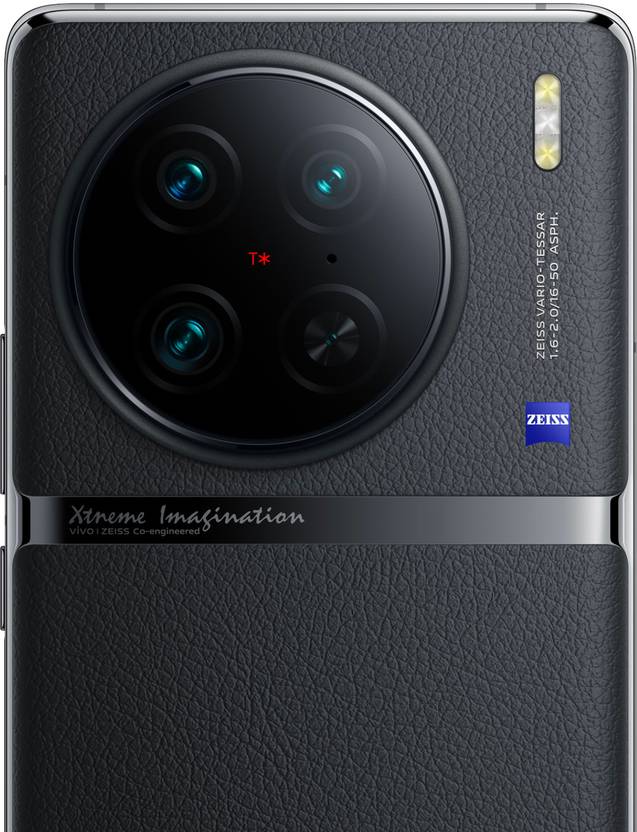
For the triple-camera setup, the X90 Pro has a large camera module on the back. At the top-right corner of the back panel, there is an LED flash, some text, and the Zeiss logo. The bright chrome strip below the camera module, which carries the text "Xtreme Imagination" in an unflattering font, diminishes the luxury appeal somewhat in my opinion.
The top and bottom edges of the metal frame are flat, but the sides are curved. Despite weighing only about 214g, the Vivo X90 Pro's weight distribution is good because it can stand up straight when placed on a flat surface without any assistance. When you hold it, though, you'll notice the weight.
Display of Vivo X90 Pro:
Curved-edge AMOLED display with 120Hz refresh rate is included on the Vivo X90 Pro. Unfortunately, it lacks an LTPO panel like the X80 Pro and offers only three variable refresh rate options: 60Hz, 120Hz, and Smart Switch. The display, with a size of 6.78 inches, provides outstanding viewing angles and delivers brilliant colours. However, the resolution has decreased from WQHD+ (3200x1440) on the X80 Pro to 2800x1260 pixels.
I never thought this was a problem because most of the stuff I watch on the phone is in full HD, but it would have been wonderful to have that higher resolution, especially when some of the competition, like the Xiaomi 13 Pro, offers it. The X90 Pro's display still has a sufficient pixel density of roughly 453ppi.
The display is said to have a maximum brightness of 1,300 nits, which I found to be more than enough for both indoor and outdoor use. Widevine L1 DRM and HDR10+ playback are supported, which is helpful with well-known apps like Netflix and YouTube.
The optical in-display fingerprint sensor on the Vivo X90 Pro is quick to authenticate and unlock the phone. However, the ultrasonic sensor on the Vivo X80 Pro offers a wider recognition area and is faster. A terrific multimedia experience is made possible with the X90 Pro's loud and clear twin speaker configuration.
Vivo X90 Pro Specifications and Software:
A MediaTek Dimensity 9200 SoC, based on a 4nm production process, powers the Vivo X90 Pro. In comparison to the X80 Pro, the phone has a slightly larger 4,870mAh battery, and it supports both 50W and 120W of fast wireless charging. NFC, Wi-Fi 6, and Bluetooth 5.3 are supported.
The Vivo X90 Pro comes with the most recent Funtouch OS 13 version based on Android 13. According to reports, the updated Funtouch OS will continue to offer a wide range of customization and personalization choices while putting more of an emphasis on refinement.
On the Vivo X90 Pro, the software experience was seamless and slick. The user interface scrolled smoothly without any stuttering. The Android security patch for April 2023 was applied to the phone, which also corrected a few problems. A few third-party apps are preinstalled, but you have the option of removing them.
Vivo has a solid track record of releasing software upgrades on schedule recently. Three years of Android updates and security patches for the X90 Pro are promised by Vivo, which is commendable, but some rivals provide marginally better support.
Vivo X90 Pro performance and battery life:
You can give the Vivo X90 Pro practically any duty, and it can do it well. I had a pleasant experience using the phone, whether it was for simple tasks like browsing through social media or more involved ones like playing games. I played Asphalt 9 Legends and Call of Duty: Mobile, and both titles played well with high graphics settings. Even with the 'Max' FPS and 'Very High' visual settings, Call of Duty: Mobile performed admirably. After playing for around 20 minutes, the phone did start to become warm quickly, directly below the location of the camera module. Having said that, I saw no detrimental effects on the performance.
Benchmark tests on the Vivo X90 Pro were also performed. In the single-core and multi-core tests of Geekbench 6, the phone received 1,694 and 4,315 points, respectively, while the device received 12,14,804 points in AnTuTu. Comparatively, the Samsung Galaxy S23 with its specialised Snapdragon SoC got 11,86,610 points in AnTuTu while the Xiaomi 13 Pro received 12,46,431 points. The new Dimensity SoC competes fiercely with Qualcomm's flagship product, and this is evident in its actual performance.
With my usage, the Vivo X90 Pro's battery life was up to seven hours of screen-on time (SoT) per charge. The average SoT should fall to roughly six hours if you use the camera more frequently or play a lot of games. The phone lasted for 18 hours and 12 minutes in our HD video battery loop test, which is respectable. Using the supplied charger, you can finish charging the phone in 29 minutes.
 |
| https://rukminim1.flixcart.com/image/832/832/xif0q/mobile/0/k/s/x90-pro-v2219-vivo-original-imagzzrqhemzfqsn.jpeg?q=70 |
Vivo X90 Pro Rear camera:
On the rear of the Vivo, X90 Pro is a 50-megapixel, 1-inch Sony IMX989 camera. The Xiaomi 13 Pro includes this feature as well. A 12-megapixel ultra-wide camera and a 50-megapixel portrait camera are also included in the X90 Pro. Vivo's V2 imaging chip is included in the phone. While there have been some encouraging improvements to the main and portrait camera sensors, the ultra-wide camera has a lower resolution than the X80 Pro. Additionally, the X90 Pro lacks the periscope telephoto camera, which is only available on the X90 Pro+ (available only in China).
The main camera's eight-element lens now contains the Zeiss T* coating, compared to just two in the previous version. However, the gimbal stabilisation system is not included with this sensor. Instead, Vivo has offered its own, specially created optical image stabilisation (OIS), which the company claims satisfies Level 4 CIPA (Camera & Imaging Products Association) requirements. Thankfully, the primary camera has no shutter lag.
 |
| https://rukminim1.flixcart.com/image/832/832/xif0q/mobile/0/k/s/x90-pro-v2219-vivo-original-imagzzrqhemzfqsn.jpeg?q=70 |
Images captured with the primary camera have excellent dynamic range and detail. As with previous Vivo phones, the colours are slightly more saturated to provide a pleasing appearance. Because of the bigger sensor's wider f/1.75 aperture, the sensor receives adequate illumination even in low light. Images captured with the primary camera generally have little visible noise, and the exposure in the highlights and shadows is well controlled.
Images captured with the 2X portrait camera have good edge recognition and bokeh. The six software filters, including the new Cine-Flare Style, that Vivo and Zeiss have provided, make shooting more enjoyable. Having said that, I have found that the programme occasionally tends to smooth out a person's head and hair's texture.
Compared to the prior model, the ultra-wide camera performs a little less well. Although the camera does well in daylight, there is a definite loss of detail in low-light shots, particularly around the edges of the frame.
The main camera on the Vivo X90 Pro can capture video in either 4K or 8K at a frame rate of 24 or 60 frames per second. Both daytime and nighttime camera performances are pretty impressive. The V2 image chip and the camera hardware guarantee that nighttime footage is well-lit and provides crisp details. The back camera's dynamic range performance in videos is likewise extremely impressive. Having said that, there were a few times when I saw stutters when shooting videos.
The camera app has two stabilisation options: standard and ultra, although ultra somewhat crops the image. When shooting at up to 1080p or 4K at 30 frames per second, ultra-stabilisation is an option. However, when you shoot at 1080p or 4K at 60 fps, the camera switches to standard stabilisation. If your subject is in the centre of the frame, there isn't much of a difference between the two modes; but, you'll see the advantage of the Ultra stabilisation mode when you have a wider frame in focus. When shooting in 8K, there is no option for stabilisation.
Vivo X90 Pro Front Camera:
There is a 32-megapixel front-facing camera for taking selfies. By default, the camera app enhances selfies by using a variety of effects to make you appear fair and slender. In my experience, edge recognition in portrait mode photographs is hit-or-miss. In some situations, the software failed to blur out the background, while in others, it blurred out some of my faces.
Only 1080p 60fps video can be captured by the front camera, but the overall video quality is respectable. It well exposed the subject and also got a lot of detail. Apart from that, devices like the Samsung Galaxy S23 and the iPhone 14 series allow for front-facing 4K 60fps video recording.
Conclusion:
The new X90 Pro continues Vivo's tradition of providing a distinctive photography experience. The primary and portrait camera sensors on the back operate really well. At times, pictures shot with the primary camera appeared to have been taken with a dedicated camera. The performance of the system, the level of quality of the display, and the battery life with quick charging are all excellent. The phone features an IP68 rating and a luxury design.
However, the Vivo X90 Pro has a few stumbles along the way that add up, especially when you consider the price. The X80 Pro did a far better job, in our opinion, compared to its ultra-wide camera, which is not particularly striking. Even while using portrait mode on the selfie camera, we weren't particularly pleased with how the photographs were handled. The Vivo X80 Pro, which is still available and a little less expensive, has all of these features as well as a periscope camera. Other misses are a lower-resolution, non-LTPO display, and an optical fingerprint reader, these features are all absent on the Vivo X90.
Additionally, the opposition has caught up. When it comes to offering a flexible camera experience, the Samsung Galaxy S23 Ultra has established a standard, but it's also significantly more expensive. The Xiaomi 13 Pro is probably the X90 Pro's main rival at the moment. It performs nearly identically to the X90 Pro while being slightly less expensive, but it lacks an official IP rating in India. There is also the Google Pixel 7 Pro, which has a standout software interface and a superior camera setup.



0 Comments